On this page+
01 / SEO
The shiniest certificate may not be the course you need
You search SEO course Hong Kong because you want a route through the fog. Maybe you are a student trying to turn curiosity into a first portfolio. Maybe you are a working professional fitting lessons around a full calendar, or the boss has decided the website should ‘do more’ and has generously given you neither budget nor a brief. Maybe you run the business and are tired of paying for reports that say ‘visibility improved’ while the phone stays quiet. Fair enough.
My short answer is not one course, but a ladder. For a low-cost institutional introduction, start with HKPC Academy. For a compact Cantonese classroom course, inspect Form.Welkin. For a formal, broader professional credential, compare PolyU SPEED and AD-Linkage. For free fundamentals that you can begin tonight, use Ahrefs Academy, Semrush Academy and Google’s own documentation. The boring part: none of these automatically turns a learner into a working SEO specialist.
“A certificate can prove that you finished a lesson. A portfolio shows that you can make a decision when the data is untidy.” — The difference employers and clients actually feel
Can the provider tell you exactly what you will practise, who will teach it, how you will be assessed, what the certificate means, and what the course does not cover? If the answer is mostly ‘page one on Google’, keep your wallet in your pocket.
This guide therefore calls a course ‘worth checking’ when its claims are inspectable—not because it has the loudest testimonials, the most dramatic before-and-after screenshot or a logo that looks vaguely university-ish. Logos are cheap. A dated syllabus, course code and honest limitations are much harder to fake.
02 / SEO
2026 Hong Kong SEO course shortlist: what each option really is
| Course / provider | Current public details | Trust signal | The catch |
|---|---|---|---|
| HKPC Academy — SEO for online visibility and leads | Online vLearn course; HK$100; about 56 minutes; Cantonese and Mandarin versions with Chinese/English subtitles; completion certificate; account stated as valid to 31 Dec 2027. | Hong Kong Productivity Council provider, named course code, published syllabus and outcomes. | A useful orientation, not enough time for a job-ready SEO portfolio. |
| Form.Welkin — Certificate in Search Engine Optimization | Face-to-face; six hours over two sessions; HK$1,200; Cantonese; Mong Kok; 80% attendance plus an end-of-course test for the certificate; next listed intake 26 Nov 2026. | Visible course code, syllabus page, assessment rule, Google Classroom support and repeat/makeup arrangement. | The page does not present it as a QF qualification or CEF course; treat the certificate as provider-issued. |
| Learnmore — SEO Intensive Course | Three-hour Cantonese face-to-face class; page currently shows a HK$300 learning-voucher price; Mong Kok or Lai Chi Kok; practical exercises and provider-issued certificate. | Named venue range, lesson structure, class-size range and practical format are disclosed. | The page still refers to 2024 SEO trends and uses strong marketing claims; verify the latest class date, instructor and syllabus before payment. |
| PolyU SPEED — AI-driven Digital and Social Media Marketing Professional Certificate | 84 hours; HK$18,800 or HK$16,800 early bird by 12 Nov 2026; starts 12 Dec 2026; QF Level 4; CEF course no. 33K157860; includes AI search, AEO, analytics and broader marketing. | PolyU SPEED page gives intake, fee, hours, QF registration and CEF information. | It is a broad digital-marketing qualification, not a pure SEO specialist course; English materials and assessments matter. |
| AD-Linkage — Practical Digital Marketing Professional Certificate | 30 hours of class plus a three-hour exam; 50% online / 50% in person; 28 Sep–28 Oct 2026 intake; provider page lists HK$13,800 before subsidy and SEO/GEO among 10 units; QF Level 4 registration 20/000004/L4. | Published timetable, assessment, QF code, CEF course number and practical module map. | SEO is one part of a wide AI, ads, content and analytics programme; subsidy figures depend on eligibility and approval. |
| Ahrefs Academy — SEO Course for Beginners | Free; no sign-up required; 14 lessons in five modules; about two hours; keyword research, on-page, links and technical basics. | Course is published by a major SEO software and education provider with a clear lesson breakdown. | It is self-study and not a Hong Kong qualification; you must create your own project and evidence. |
| Semrush Academy — SEO courses | Free self-paced courses; certificates after the required quizzes or exams; current catalogue includes SEO essentials, local SEO, technical SEO and AI-search topics. | Named instructors, course pages, assessments and certificates from an established SEO tool provider. | The teaching naturally leans toward Semrush workflows; learn the principles, not only the buttons. |
This is a comparison of publicly visible evidence, not a hidden league table. Fees and intakes move. A course page that says ‘HK$100’ today may be replaced tomorrow, and an early-bird price has the lifespan of a Hong Kong pineapple bun left unattended in a meeting room.
The first decision is therefore not ‘which logo is best?’ It is ‘what outcome do I need?’ If you need to understand the vocabulary before speaking to an agency, HKPC may be plenty. If you want a credential with a formal framework, a QF Level 4 route is a different purchase. If you want to do local SEO for your own shop this weekend, an 84-hour programme may be educational overkill—with respect to overkill, it is very good at being overkill.
03 / SEO
Local short courses: HKPC, Form.Welkin and Learnmore
HKPC Academy is the cleanest low-cost starting point in this group. Its published course page lists HK$100, roughly 56 minutes, a vLearn online format, Cantonese and Mandarin versions with Chinese and English subtitles, a four-part syllabus and a Certificate of Accomplishment after completion. It covers SEO basics, keyword research, on-page and off-page foundations, Google Analytics and Search Console, with case examples.
That is a good orientation. It is not a secret backdoor into the profession. In less than an hour, you can learn the map; you cannot realistically learn how to audit a messy multilingual site, diagnose indexation, write an intent-led content brief, protect a migration or explain revenue attribution. If the learner is a small-business owner who wants to stop feeling helpless in agency meetings, though, the price-to-clarity ratio is quite sensible.
Form.Welkin offers a more classroom-shaped option. Its current course page lists six hours over two sessions, HK$1,200, Cantonese instruction in Mong Kok, a requirement of 80% attendance and a passing end-of-course test for the certificate. It also describes Google Classroom materials, assignments and support, plus free repeat and makeup arrangements. The page lists a 26 November 2026 intake.
The important qualifier is not an insult; it is a category label. The certificate is provider-issued. The page does not present this course as QF-recognised or CEF-reimbursable, so do not write ‘government-accredited SEO certificate’ on your CV unless another official source says that. The course may still be useful. A six-hour Cantonese class with a test can be far more helpful than a 30-hour course where you never touch a site. It depends on the teaching and what you do afterwards.

Learnmore’s SEO Intensive Course is the shortest and most hands-on-looking entry in the shortlist. The provider page describes a three-hour Cantonese face-to-face class, practical work on a computer, locations in Mong Kok or Lai Chi Kok, and a provider-issued certificate; it currently shows a HK$300 learning-voucher price. That makes it a low-risk taster if the date and instructor are current.
But this is where reading the page matters. The same page still talks about ‘2024 SEO trends’ and includes enthusiastic ranking language and student testimonials. That does not make the class worthless; it does mean you should ask for the latest deck, examples of the actual exercise, the instructor’s current experience and the refund terms before handing over money. A dated page is not automatically a scam. It is simply a page asking for one more question.
After a three-to-six-hour class, your next assignment should be your own website or a practice site. Write one page brief, inspect Search Console, improve one page, record the before-and-after evidence, and explain what you would do next. Otherwise the certificate becomes a souvenir tucked behind the Octopus card.
04 / SEO
Formal professional routes: PolyU SPEED and AD-Linkage
PolyU SPEED’s AI-driven Digital and Social Media Marketing Professional Certificate is the most formal route in the shortlist. The current programme page lists an 84-hour course starting 12 December 2026, a regular fee of HK$18,800 and an early-bird fee of HK$16,800 by 12 November 2026. The page identifies QF Level 4 registration 23/001128/L4 and CEF course number 33K157860. It also says the course runs across 12 weekend classes until 19 June 2027, is taught in Cantonese with English support, and uses English for materials and assessment.
The SEO relevance is real but not exclusive. The updated curriculum includes AI search, AEO, generative AI, social media, AI-driven analytics and privacy alongside digital-marketing strategy. That is attractive if you want to become a broader growth marketer who understands search. It is not the neatest choice if all you want is technical SEO, migrations and log files. You would be paying for the wider marketing machine too.
AD-Linkage’s Practical Digital Marketing Professional Certificate is shorter and more operationally mixed. Its current programme page lists a 28 September to 28 October 2026 intake, 30 hours of class plus a three-hour exam, five online and five in-person sessions, Chinese teaching with English support, and an in-person venue in North Point. The provider states a regular course fee of HK$13,800 and a projected minimum self-payment of HK$1,640 after the listed CEF and online-rebate conditions; actual reimbursement depends on eligibility and approval.
SEO/GEO appears as one of ten practical units, alongside Google Ads, Meta ads, AI content, remarketing and Google Analytics. That is a strength for a small business owner or generalist marketer who needs a full acquisition workflow. It is a weakness for a learner who expects ten units of SEO alone. The course page also says the Tencent WorkBuddy certificate is not automatic: a separate training and assessment must be completed. Small wording, large difference.
Here is the CEF point people often skip. CEF is a reimbursement scheme, not a teaching-quality badge. The official CEF guidance says only registered reimbursable courses qualify, successful completion includes attendance and assessment requirements, and learners should verify the course information. The government’s own information also says course providers and course quality can vary. That is unusually plain-spoken—and very useful.
QF Level 4 is also worth reading correctly. It tells you the qualification’s place in Hong Kong’s Qualifications Framework; it does not certify that a learner can independently grow a clinic, migrate an e-commerce store or recover a site after an algorithm update. Credentials help you clear a door. They do not walk you through it.
05 / SEO
Free and international online learning: the route that costs time instead of tuition
Ahrefs Academy is unusually easy to start. Its SEO Course for Beginners is free, needs no sign-up, contains 14 lessons in five modules and takes about two hours. It covers keyword research, on-page SEO, beginner link building and technical fundamentals. For somebody who wants to test whether SEO is actually interesting before spending HK$1,200 or HK$18,800, this is the obvious first date.
Semrush Academy is better when you want a course-shaped learning path and a completion certificate. Its SEO catalogue describes free self-paced courses and certificates after the required quizzes or exams; the current catalogue includes SEO essentials, local SEO, technical SEO and AI-search topics. The technical SEO course covers crawlability, indexing, structured data, Core Web Vitals and AI-search basics, while the local SEO course covers Google Business Profile, local research, reviews, citations and local measurement.
The catch is tool gravity. Ahrefs teaches through Ahrefs. Semrush teaches through Semrush. That is not a flaw; it is the business model. Just separate the principle from the interface. Keyword intent exists whether the button is green, orange or hidden in a menu designed by someone who enjoys menus.
Google Search Central is the essential counterweight. Its SEO Starter Guide explains crawling, indexing, site structure, useful content, titles, descriptions, links and image context. It is not a general Google SEO certificate or a magic course that makes a website rank. It is the closest thing to an official foundation, and it repeatedly reminds readers that no secret automatically puts a site first.
One current trap is old HubSpot SEO course lists. HubSpot’s page says its SEO Certification was retired on 25 June 2026 and replaced by new AEO certifications, including AEO Fundamentals. A 2025 article telling you to take the old HubSpot SEO certificate may have been accurate then and stale now. This is why course recommendation pages need dates; SEO education has a small graveyard of ‘current’ lists that are not current.
Use one free course to learn the vocabulary, one real site to practise, and one report to explain what changed. The tuition is zero; the discipline is not.
06 / SEO
How to tell whether an SEO course is actually trustworthy
| Trust check | Good evidence | What it does not prove |
|---|---|---|
| Provider identity | A real organisation, contact route, address or institution page, plus a course code that can be checked. | That every instructor is excellent or every cohort is well taught. |
| Current syllabus | Dated modules covering search intent, technical SEO, content, measurement and ethical promotion. | That the examples still match your industry or Hong Kong search behaviour. |
| Assessment | A quiz is fine for recall; an audit, page brief, implementation or presentation tests usable judgement. | That passing means you can work independently. |
| Hands-on access | A sandbox site, Search Console data, analytics, CMS practice or a portfolio deliverable. | That the provider guarantees a live ranking result. |
| Credential status | QF registration, CEF course number or a clearly provider-issued certificate, labelled accurately. | That the credential carries the same weight as a degree, licence or Google qualification. |
| Claims and testimonials | Specific outcomes with dates, context and limitations; no promise of a fixed Google position. | That a student result will repeat for you. |
| After-class support | Office hours, feedback, repeat policy, community or a clear route to ask questions. | That the support will last forever or include one-to-one consulting. |
Google’s own hiring guidance says nobody can guarantee a number-one ranking and recommends realistic estimates and read-only Search Console access at the start of a professional relationship. The same principle applies to courses. A trustworthy teacher can promise a method, a practice task or a feedback session. They cannot honestly promise what Google will do with your site next Tuesday.
Read the provider’s language carefully. ‘Learn SEO fundamentals’ is a modest claim. ‘Control your ranking’ is a much larger one. ‘Certificate of attendance’ is different from ‘QF Level 4 qualification’. ‘CEF eligible’ is different from ‘government approved’. The words may look like cousins, but they do not live in the same flat.
Ask for the latest deck
If the page says 2024 trends in September 2026, ask what has been updated and when.
Ask who teaches
Look for a named instructor, current work and the kind of websites or problems they have actually handled.
Ask what you build
A real brief, audit, dashboard or page is more useful than another hour of slides about ranking factors.
Ask what the certificate says
Get the exact wording before you put it on a CV or claim it is QF, CEF or institution-accredited.
Ask what is not covered
No technical SEO? No local SEO? No links? No analytics? A limitation stated is safer than a gap hidden.
A course can be trustworthy and still be the wrong course for you. That distinction matters. A beginner class is not ‘bad’ because it does not teach log-file analysis; it is bad only when it sells itself as the whole profession while quietly leaving the hard work outside the door.
07 / SEO
What a proper Hong Kong SEO curriculum should teach
| Module | A serious beginner should be able to… | Portfolio evidence |
|---|---|---|
| Search intent and keyword research | Separate research, comparison, local and purchase queries; map them to pages instead of stuffing phrases everywhere. | A keyword-to-page map with reasons, not only a CSV export. |
| On-page structure | Write useful titles, headings, descriptions, internal links and page briefs for people first. | One before/after page with the changes explained. |
| Technical SEO | Understand crawlability, indexation, canonicals, redirects, sitemaps, mobile experience and structured data at a practical level. | A prioritised technical audit with impact, effort and owner. |
| Local SEO | Set up and improve business information, local pages, reviews, photos and conversion paths without inventing locations. | A local visibility plan for a real Hong Kong service business. |
| Content and evidence | Build original, accurate pages with subject knowledge, useful examples and a refresh plan; avoid mass-produced filler. | One brief, one published page and one update decision. |
| Authority and links | Understand why relevant mentions help, how risky link schemes work and what ethical outreach looks like. | A small outreach list with relevance, reason and risk notes. |
| Measurement | Use Search Console and Analytics to separate impressions, clicks, enquiries, revenue and noise. | A simple monthly report that leads to a decision. |
| Hong Kong multilingual SEO | Think through Traditional Chinese, English and Simplified Chinese intent, canonicals, hreflang, URL structure and editing—not just translation. | A three-language page map with ownership and QA steps. |
| AI search and automation | Use AI to research, draft or analyse while checking sources, authorship, privacy and the actual usefulness of the page. | An AI-assisted workflow with human review and a claim-check log. |
Notice what is missing from the table: a promise that you will memorise Google’s secret algorithm. Google does not publish a secret cheat sheet, and a course that pretends otherwise is selling theatre. The durable skill is diagnosis: seeing a page, a query, a result page, a technical constraint and a business goal, then choosing the next sensible action.
For Hong Kong specifically, the language layer is not decoration. A customer may search in Cantonese-flavoured Traditional Chinese on a phone, compare an English product page, then ask a colleague for a Simplified Chinese supplier page. The course does not need to make you a linguist, but it should teach you to validate wording, intent and page ownership with native readers. Direct translation is not a strategy; it is only the first draft wearing a tie.
And yes, AI belongs in the modern syllabus—but as a tool inside a workflow. Learners should know how to create a brief, compare sources, identify a hallucinated claim, protect customer information, edit for local intent and decide when the fastest answer is not the safest one.
For every major module, produce one artefact you could show an employer or client. If the course gives you only notes, make the artefacts yourself before calling the learning complete.
08 / SEO
Which route fits you: student, working professional, owner or agency learner?
| Your situation | Recommended sequence | What to avoid |
|---|---|---|
| Student | Ahrefs beginner course → Google Starter Guide → HKPC or a classroom option → one small portfolio site → Semrush assessment. | Collecting certificates without a portfolio, feedback or a real page you can explain in an interview. |
| Working professional | Start with Ahrefs or HKPC in short evening blocks → practise on your employer’s approved project or a sandbox site → take Form.Welkin, AD-Linkage or PolyU SPEED if the structure fits your timetable and career plan. | Choosing a long programme only because the title sounds impressive, then missing practice because your week is already packed. |
| Business owner | HKPC foundation → audit your own site → local SEO and conversion practice → hire technical help when the risk is beyond your time. | Spending for a broad professional certificate when you only need to understand an agency’s priorities. |
| Agency or freelance learner | Structured course or mentor → ten small audits/page briefs → reporting templates → supervised delivery on different industries. | Using a certificate as a substitute for references, QA and an ethical link process. |
A sensible 90-day learning plan is not dramatic. In days 1–14, learn the vocabulary and inspect three real result pages. In days 15–30, audit one site, map search intent and fix one page. In days 31–60, publish or improve two pages, add tracking and record what changed. In days 61–90, make a report, explain the trade-offs and ask someone experienced to challenge your conclusions.
That last part matters. SEO is full of confident opinions because the platform is opaque and the work is messy. A second pair of eyes catches the page you thought was ‘optimised’ but is actually just repetitive, the redirect you forgot, the local claim you cannot prove and the KPI that looks impressive because it was chosen after the result arrived.

If you are choosing between a short class and a formal route, ask what you will do on Monday morning after the final lesson. If the answer is ‘I will download the certificate’, pause. If the answer is ‘I will audit our service pages, check Search Console, rewrite the brief and show my manager the measurement plan’, now we are getting somewhere.
09 / SEO
Before you pay: the questions that save learners from an expensive detour
- What is the next confirmed intake?A page with a course description but no current date is a brochure, not yet a plan.
- What exactly is included in the fee?Ask about exams, software, tool subscriptions, handouts, recordings, make-up classes and certificates.
- Who teaches the class now?A named current instructor is more useful than a generic statement about ‘industry experts’.
- What will I build or submit?Ask for the actual audit, page brief, dashboard, website task or final assessment.
- Is the certificate provider-issued, QF-recognised or CEF-reimbursable?Make the provider show the exact course code and official listing; do not rely on a badge in an ad.
- How much is live practice?Slides can explain a concept; practice reveals whether you can use it.
- What happens if the syllabus changes?SEO changes; a responsible provider should explain update practice, not hide behind a static PDF.
- What is not covered?This question prevents a beginner course from being mistaken for a technical-specialist programme.
- Are ranking or traffic results guaranteed?If yes, walk carefully. Google itself warns that no one can guarantee a number-one ranking.
- What is the refund or transfer policy?Course logistics are not glamorous, but they become very interesting when your shift changes.
FAQ: Will an SEO certificate help me get a job?
It can help you get noticed, especially when you are starting from zero, but it will not carry an interview by itself. Pair it with a small portfolio: a keyword map, a technical audit, a before-and-after page, a Search Console interpretation and a one-page recommendation. Five honest pages of evidence beat one certificate described as ‘advanced’ when nobody can see what you did.
Can any SEO course guarantee first-page rankings?
No honest course can guarantee that. Google says there are no secrets that automatically rank a site first, and its SEO hiring guidance warns against number-one guarantees. A good instructor can teach you a repeatable process; Google still gets a vote. Sometimes a very loud vote.
Is CEF or QF Level 4 enough to prove the course is good?
No. They are useful signals about registration or qualification level, but they are not a universal teaching-quality guarantee. Check the official course information through the CEF guidance and Qualifications Register, then inspect the syllabus, assessment and instructor separately.
If I only choose one starting option, what should I pick?
For a student on a tight budget, start with Ahrefs plus Google’s guide, then take HKPC or a classroom course if you need explanation and accountability. For a working professional, compare the weekly time demand, practice format and total out-of-pocket cost before committing to a longer programme. For a formal career transition, compare PolyU SPEED and AD-Linkage on scope and assessment—not just the subsidy headline. For an owner, learn enough to judge priorities before buying a long programme.
Trusted SEO course in Hong Kong does not mean the course with the loudest badge. Choose the one whose promises, syllabus, assessment and limitations you can actually inspect—and leave with work you can show.
The best course is the one that changes what you do next. A clearer audit. A better page. A cleaner report. A more honest conversation with an agency. Start there, and let the certificate follow the work instead of pretending to replace it.
RESEARCH + CREDITS
Sources, course notes and image credits
- Google Search Central, SEO Starter Guide
- Google Search Central, Do You Need an SEO?
- Google Search Central, Spam Policies
- HKPC Academy, Digital Marketing: Enhancing SEO for Online Visibility and Leads
- Form.Welkin, Certificate in Search Engine Optimization
- Learnmore, SEO Intensive Course
- PolyU SPEED, AI-driven Digital and Social Media Marketing Professional Certificate
- AD-Linkage, Professional Certificate in Practical Digital Marketing
- Hong Kong Continuing Education Fund FAQ and scheme information
- Hong Kong Qualifications Register
- Ahrefs Academy, SEO Course for Beginners
- Semrush Academy, SEO courses and certification
- HubSpot Academy, SEO certification update
Photo credits
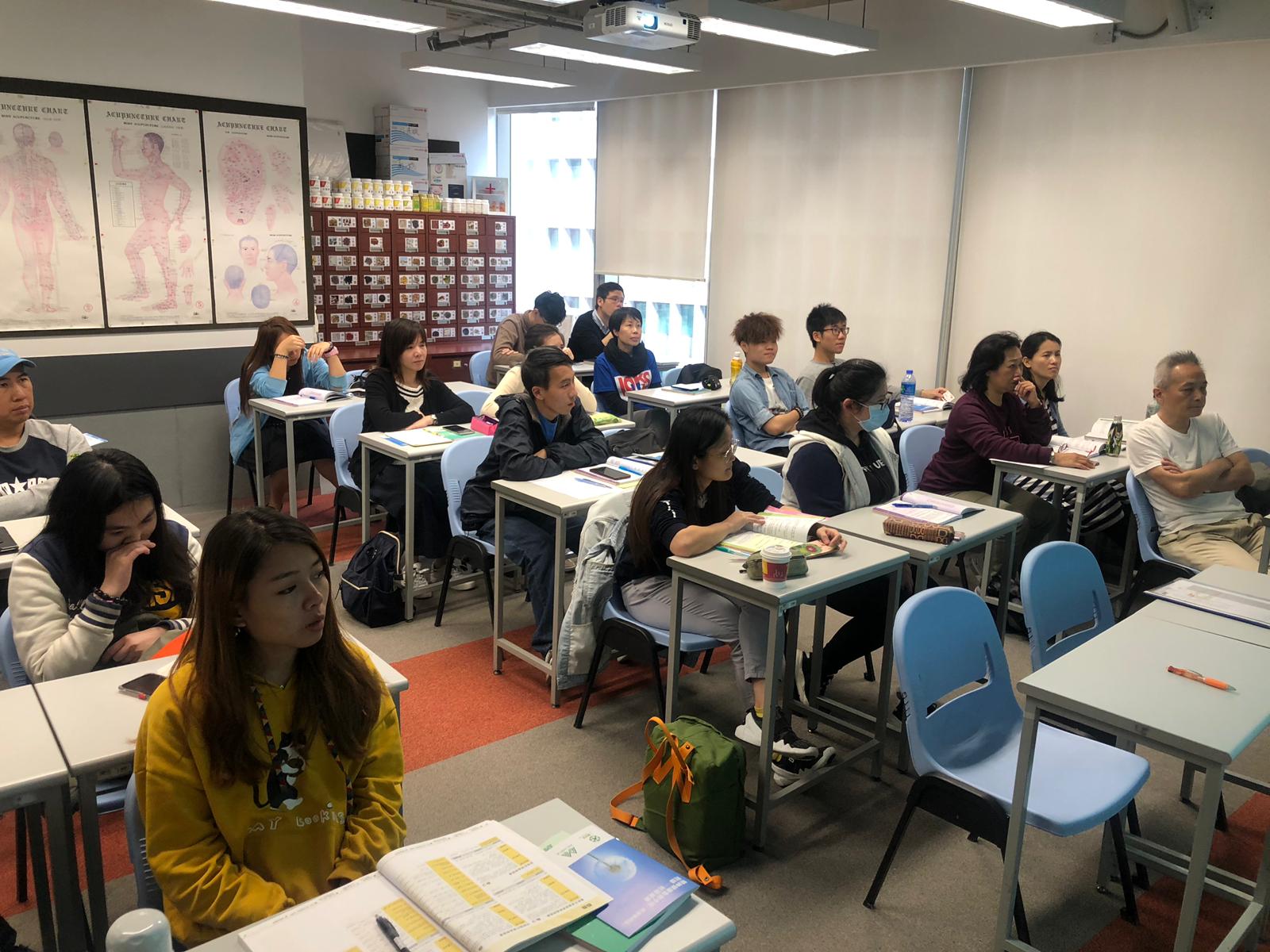
- 01-hong-kong-evening-class.jpeg — Real Hong Kong adult-learning classroom photograph from HKCT. Direct image: original file.
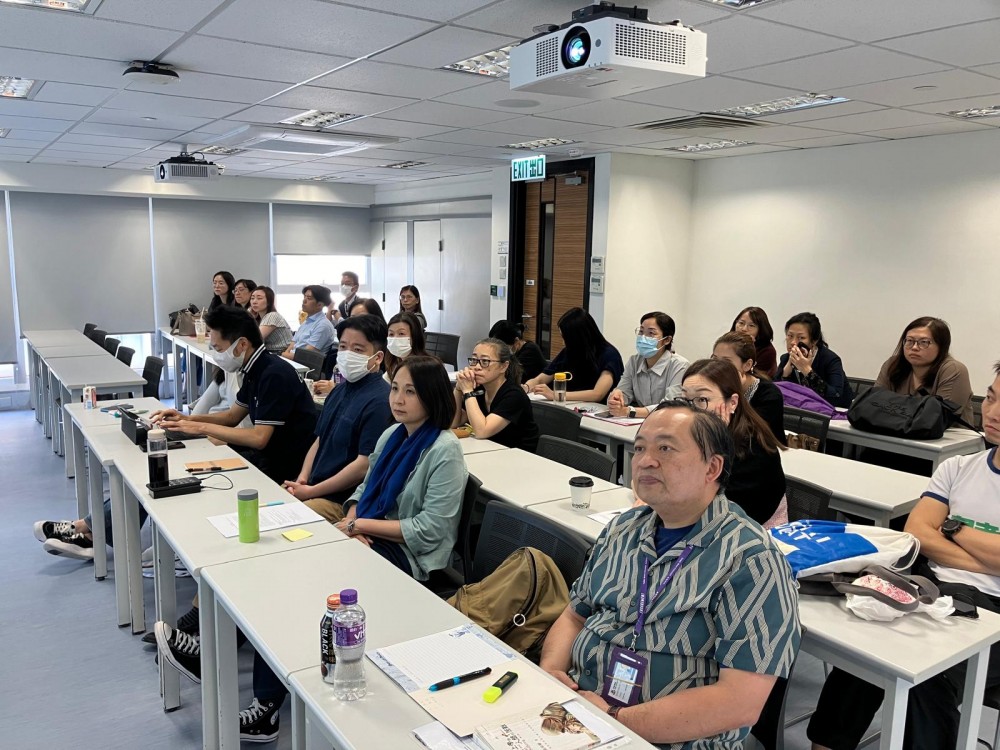
- 02-tung-wah-workshop.jpg — Real professional-development workshop photograph from Tung Wah College. Direct image: original file.
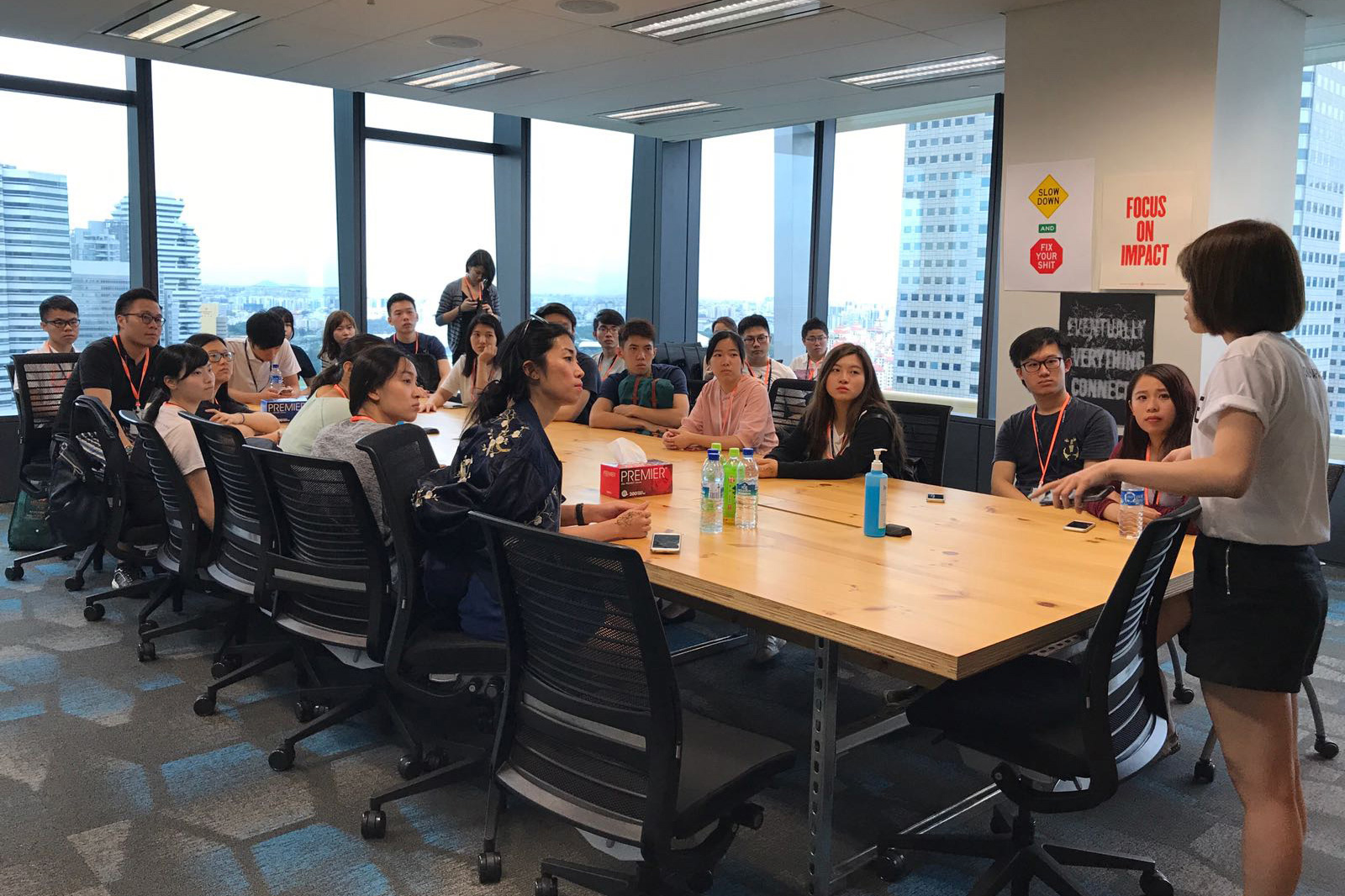
- 03-hkgcc-marketing-workshop.webp — Real Google Ads and digital-marketing workshop photograph at HKGCC, via Garage Society. Direct image: original file.
- 04-cityu-marketing-workshop.jpg — Real CityU marketing workshop photograph from City University of Hong Kong. Direct image: original file.
- 05-hong-kong-ai-workshop.jpg — Real Hong Kong AI and communications workshop photograph from DotAI. Direct image: original file.
Research current through 2026-09-15 UTC. Course fees, dates, subsidies, availability and syllabuses can change; the comparisons below record what provider or official pages publicly stated at the research cutoff. A course being listed, QF-recognised or CEF-reimbursable is not, by itself, a guarantee of teaching quality or job outcomes. Provider pages, course schedules, fees and subsidy information can change. Verify the latest intake, terms, assessment and official registration before enrolling. Image reuse rights remain with the original publishers or photographers.